Workspace content stays customer-controlled
Vault treats chats, files, notes, transcripts, and generated documents as workspace data governed by team access.
Trust Center
Vault is built for teams that need AI to fit security, privacy, procurement, and operational review. This page summarizes how Vault approaches customer data, model access, auditability, and responsible disclosure.
Last updated: May 5, 2026
At a glance
The goal is simple: centralize AI work in a governed workspace so teams can understand what data is used, who has access, which models are available, and where outputs remain.
Vault treats chats, files, notes, transcripts, and generated documents as workspace data governed by team access.
Vault is designed so customer workspace content is not used to train third-party AI models.
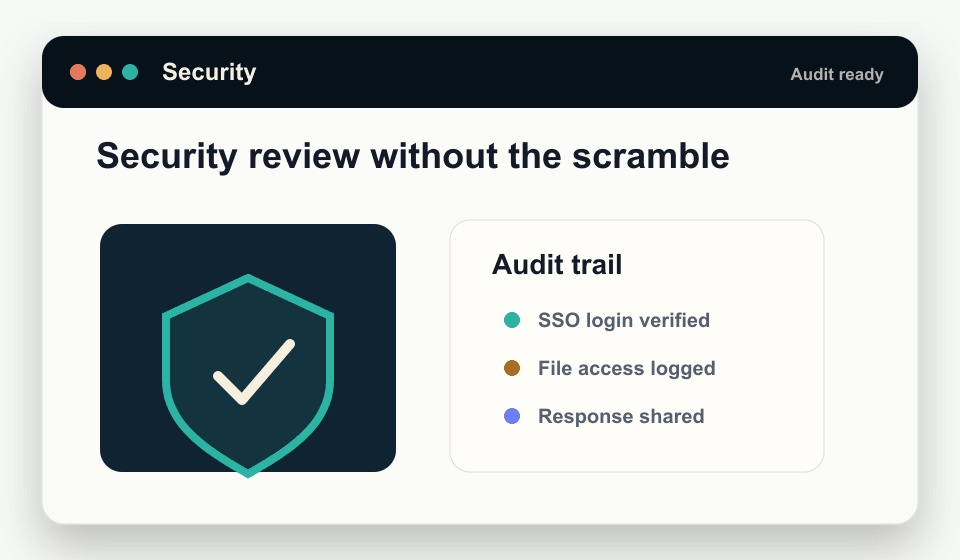
Workspace membership, SSO support, permissions, and model availability help teams reduce unmanaged AI usage.
Shared context, generated work, and audit-oriented history stay together for permitted teammates and reviewers.
Security posture
Vault focuses on reducing unmanaged AI usage by giving teams one governed workspace for model access, shared knowledge, files, meetings, and generated work products.
Workspace content is treated as customer-controlled data and is designed to stay inside managed team workspaces.
Admins can organize access around users, teams, workspaces, and model availability.
Vault keeps AI work, context, and collaboration closer together so reviewers can understand how outputs were produced.
Teams can bring multiple AI models into one approved workspace instead of scattering sensitive prompts across unmanaged tools.
Data flow
Security teams usually need to understand where data enters, how context is controlled, which model is used, and where the output remains after generation.
A permitted user starts a chat, uploads a file, captures notes, or opens shared workspace knowledge.
Workspace membership, model access, and configured team boundaries shape what context can be used.
The selected model returns an answer or draft inside Vault, where the result can be reviewed and reused.
Chats, documents, files, and activity history remain in the workspace for permitted teammates and admins.
Buyer review
These are common questions from security, privacy, compliance, and procurement teams evaluating AI workspaces.
Procurement
Public pages can answer the first layer of review. Detailed security materials, contractual terms, and regulated-data commitments should be requested through the review process.
Responsible disclosure
Email hello@vaultsystems.ai with enough detail for us to investigate. Please avoid accessing, changing, or disclosing data that is not yours.